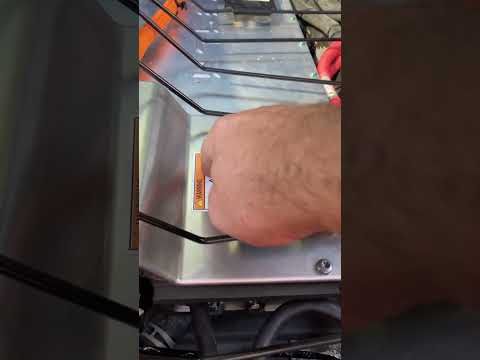
Video by BenjaminNelson via YouTube
Source
https://300mpg.org/tesla-v2l/
I modified the inverter board for my Tesla Vehicle to Load project. This is a 240V inverter, with a potentiometer which allows for fine-tuning the output voltage. It is adjustable enough to bring down to 120VAC.
On my car, I wanted to be able to output either 120 OR 240V.
I removed the potentiometer from the board and added two pins in its place, which I could then connect to a pair of wires.
I ran those wires to a switch to choose between either that same potentiometer OR several resistors which I soldered together.
Before removing the potentiometer from the inverter, I checked to see what it’s resistance was when the output was 120V or 240V. Then I simply reproduced that that resistance with fixed resistors. I first tried to do BOTH 120 and 240V control with fixed resistors. I nailed the 240V output, but the 120V resistance wasn’t quite right. (The inverter was outputting 161VAC!) I realized that it was much simpler to reuse the potentiometer that I pulled off the main board than to try to add up and solder the exact correct resistance, so I simply put in the pot for 120V.
After that, flipping the switch gave me perfect 120 OR 240V output!
The inverter is rated for 4,000 watts at 240V, so I could actually use it to charge other electric cars at 16A/240V!